Urban Oddities
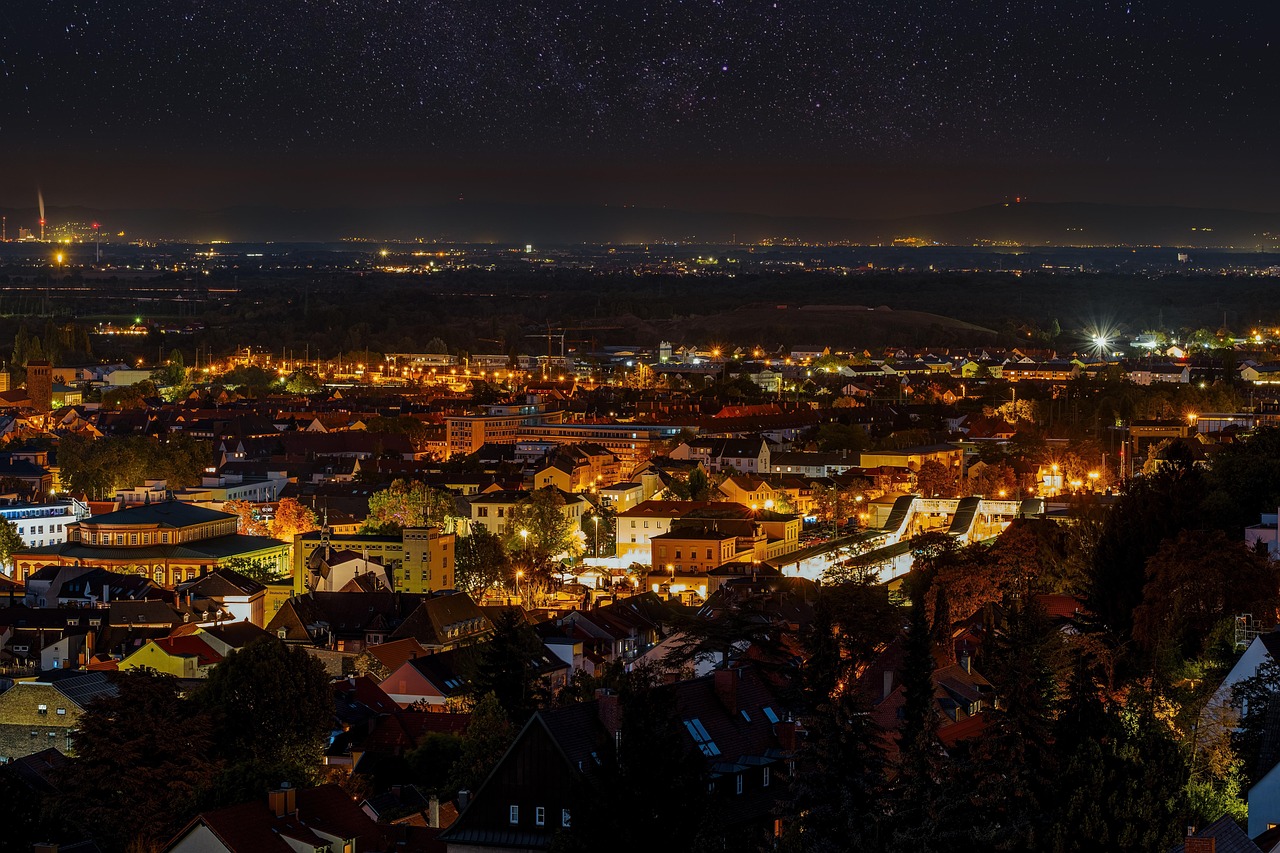
Ask two people how big a city feels and you may get opposite answers about the same place. One will say it is overwhelming, endless, impossible to know. The other will say it is manageable, almost a village. Both are describing the same streets. The difference is not the size of the city but the number of distinct worlds it contains and how easily you can move between them.
Population figures are a poor guide to perceived size. A city of two million spread across a single uniform fabric of low-rise housing can feel smaller than a city of eight hundred thousand that packs a historic core, a port district, a university quarter, a garment district, and three or four distinct immigrant neighborhoods into a few square kilometers. What registers as bigness is variety, not headcount.
Cities feel larger when their internal boundaries are sharp. A river, a rail embankment, a steep hill, a highway, or a change in street grid can make two adjacent neighborhoods feel like separate towns. Crossing such a boundary is a small event, and events accumulate into a sense of scale. In cities where everything blends smoothly, you can walk for an hour and feel you have not gone anywhere.
Language and signage do a lot of this work too. A neighborhood where shop signs, overheard conversations, and restaurant menus are in a script you cannot read feels further from home than its distance warrants. This is not a problem to be solved; it is part of what makes a city interesting. The feeling of being slightly out of your depth is one of the reliable pleasures of urban exploration, and it is available in any city that has not been flattened into homogeneity.
Transit networks also shape perceived size, but not in the way you might expect. A fast, legible metro system makes a city feel smaller, because distant districts become reachable and therefore ordinary. A slow, confusing bus network makes a city feel larger, because whole quadrants remain theoretical. Many residents of large cities have never visited certain neighborhoods not because they are far but because getting there is a puzzle.
If you want to experience your own city as larger, the trick is to collect worlds rather than distances. Learn one street in a neighborhood you have no reason to visit. Find the market, the park, the bus stop, the place where people argue about football. Do this in four or five different districts and the city will expand around you without a single new building going up.
The reverse is also true. A city can shrink. When neighborhoods are redeveloped into the same chain stores and the same glass balconies, the boundaries dissolve and the variety collapses. Residents of such cities often report that the place feels smaller than it did twenty years ago, even as the population grows. They are not misremembering. They are noticing that the number of distinct worlds has fallen, and with it, the sense of scale that made the city feel inexhaustible.
