Urban Oddities
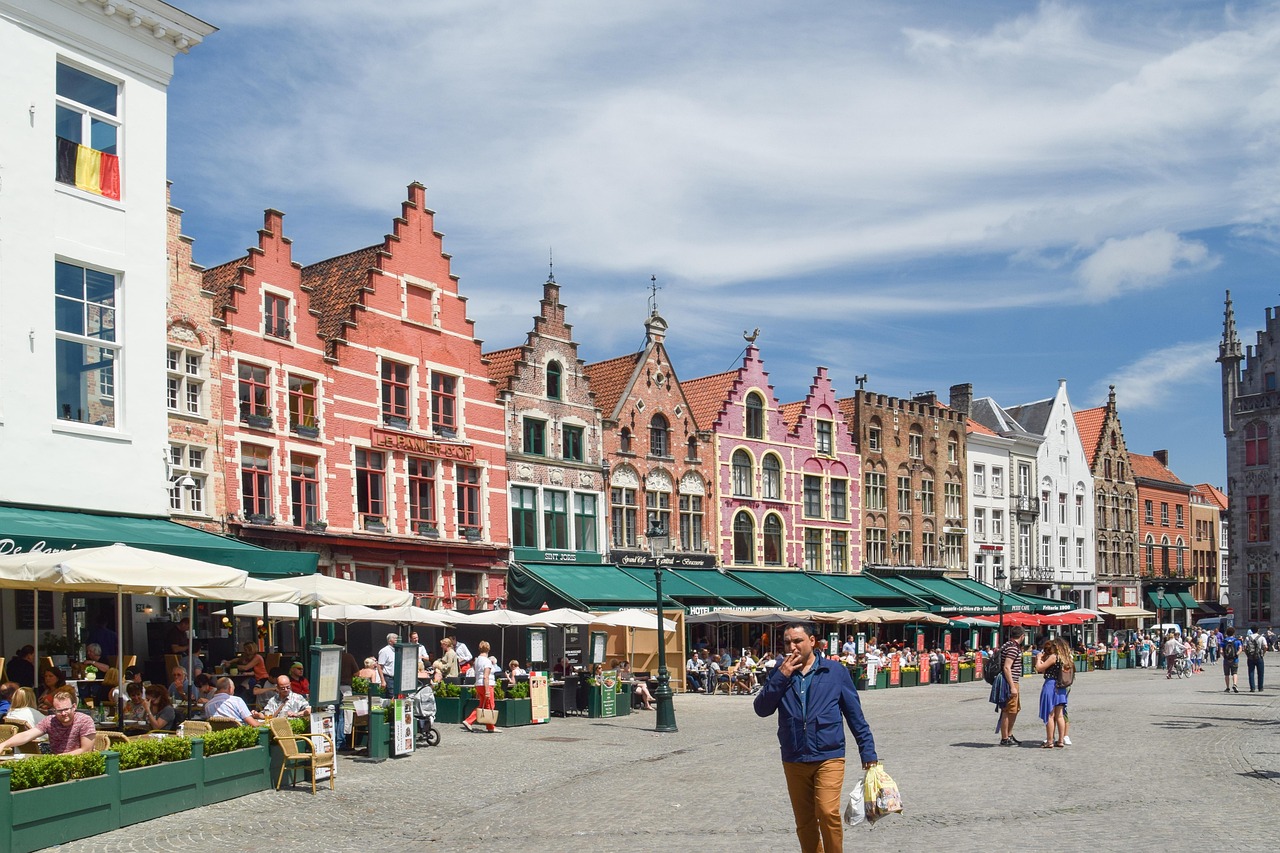
Long before anyone thought of a city as a network, the market square was doing the work that we now assign to search engines. If you needed a plumber, a rumor, a secondhand chair, a job, a marriage prospect, or news from three towns over, you went to the same patch of pavement and waited. The square was not just a place to buy things. It was the city's index.
That function explains a lot about why market squares look the way they do. They are usually wide, open, and slightly irregular, with a few permanent buildings — a church, a town hall, a weigh house — anchoring the edges. The irregularity is not a failure of planning. It is the residue of centuries of negotiation over who got to stand where. Butchers, fishmongers, grain sellers, and cloth traders each had their customary territory, and the boundaries were enforced socially if not legally.
The geography of a market square was information architecture. A stranger arriving in town could read the square and know where to go. The produce was near the church, the livestock was at the edge where the smell would not bother anyone, the moneylenders were under the arcade, the notices were nailed to the town hall door. No signage required. The layout itself was the interface.
This is why so many European and Latin American cities still feel legible in a way that newer cities do not. The central square, even when it has been repaved and filled with cafés, retains the memory of that indexing function. People still use it to meet, to protest, to celebrate, and to find out what is happening. The function survived the technology that supposedly replaced it.
In cities without a strong market-square tradition, the equivalent spaces are often more improvised: a particular bus stop, a corner outside a convenience store, a stretch of boardwalk, a plaza in front of a transit station. These places perform the same role, and they usually emerge rather than being planned. Attempts to design a new civic gathering space from scratch often fail precisely because the design assumes people will come for the space itself, when in reality they come for the other people.
When a market square is converted entirely into a tourist attraction, it stops being an index and becomes a photograph. The information function migrates elsewhere — often to a shopping mall, a train station, or increasingly to group chats and neighborhood apps that recreate the square's old role without any of its accidental encounters. That loss is not trivial. A city where people only find each other through filtered channels is a city where the unexpected meeting, the overheard argument, the chance introduction, all quietly disappear.
The next time you stand in a central square, watch how people use it. Not the tourists with cameras, but the locals who cut across it on the way to work, the older men on the same bench every morning, the woman selling flowers from a bucket. They are running the old search protocol, and the square is still answering.
